Italian Fascism social values: 21% spending on welfare
"The MSI was disbanded in 1995 and was replaced by National Alliance, a conservative party that distanced itself from Fascism."
The legacy of Italian Fascism involves a complex shift from total state control to modern conservative politics. This analysis explores how social values were reshaped through state-run programs and how those structures eventually dissolved.
Key takeaways include the limited success of cultural molding compared to other regimes, the expansion of social security in the late 1930s, and the eventual political transition toward democratic conservatism.
How did Italian Fascism social values manifest in daily life?

A worker in 1939 might have found leisure through state-organized sports or community gatherings. These activities were designed to integrate the populace into a singular national identity.
The regime attempted to shape a specific culture through various social programs.
While the state sought total ideological dominance, the depth of this cultural shift remained limited.
The scope of these efforts varied across different sectors of society. For instance, nearly 40% of the industrial workforce had been recruited into the Dopolavoro by 1939, and the sports activities proved popular with large numbers of workers.
This recruitment allowed the state to touch the lives of many through leisure.
What were the primary changes in social security and health?
A family in the late 1930s might have relied on newly established state-run insurance systems. These programs were central to the regime's attempt to provide a social safety net.
The expansion of state-run welfare was a significant component of the era's social policy. At the end of the 1930s, 13 million Italians were enrolled in the state health insurance scheme. By 1939, social security expenditure accounted for 21% of government spending.
These figures represent a massive shift in how the state managed the well-being of its citizens. The scale of these programs was intended to demonstrate the benefits of the regime's structure. I noticed that such widespread enrollment was a hallmark of this specific period.
How did political shifts impact the legacy of the regime?

A political leader in the 1990s might have stood before an international audience to denounce the very ideology they once represented. This transition reflects the movement from radicalism to mainstream conservatism.
The political landscape changed significantly after the original regime fell. The MSI was disbanded in 1995 and was replaced by National Alliance, a conservative party that distanced itself from Fascism.
Its founder, former foreign minister Gianfranco Fini, declared during an official visit to the State of Israel that Fascism was "an absolute evil."
Later, these political threads merged and split again. National Alliance and a number of neo-fascist parties were merged in 2009 to create the short-lived People of Freedom party led by then Prime Minister Silvio Berlusconi, which eventually disbanded after the defeat in the 2013 general election.
What were the consequences of the regime's collapse?
A soldier in 1943 might have witnessed the sudden shift in power as the monarchy intervened. The collapse of the original structure led to immediate and violent political restructuring.
The end of the regime was marked by internal conflict and external pressure. After the German-Italian defeat in Africa, the successes of the Soviet Union on the Eastern Front, and the subsequent Allied landings in Sicily, King Victor Emmanuel III successfully overthrew and arrested Mussolini.
The period following this was characterized by instability. The RSI took revenge against the 19 members who had voted against Mussolini on the Grand Council with the Verona trial, which handed down a death sentence to all of the accused but one. This period of transition was fraught with tension.
How can we compare these values to modern political structures?
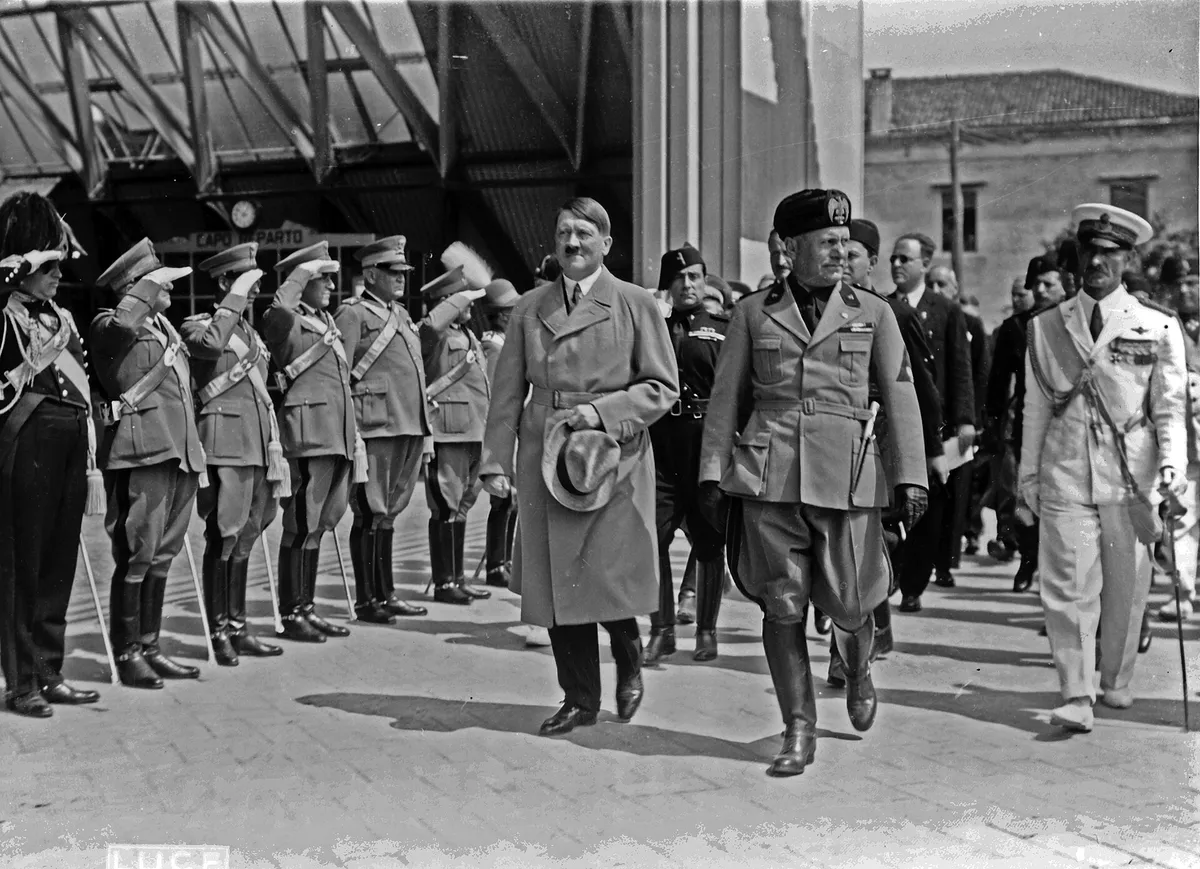
A modern observer might look at historical data to understand the roots of contemporary European conservatism. Comparing the past to the present requires looking at both the structure of the state and the evolution of its parties.
The transition from the MSI to the National Alliance represents a move toward traditional conservatism. This shift was a deliberate attempt to distance the new political entity from its radical origins. The focus moved from total state control to a more standard conservative platform.
| Period | Notable Social Action |
|---|---|
| Late 1930s | 13 million enrolled in health insurance |
| 1939 | 40% of industrial workforce in Dopolavoro |
The comparison shows how much the state's role changed. While the regime used social spending to build support, modern parties operate within a vastly different democratic framework.
How did specific groups experience these social changes?
A scholar might look at the intersection of science and state-mandated exclusion. The experience of specific groups was often defined by the changing laws of the state.
The impact of state decrees was felt heavily by specific populations. When Mussolini's anti-Semitic decrees began depriving Jews of employment in Italy, Pius XI personally admitted professor Vito_Volterra, a famous Italian Jewish mathematician, into the Pontifical Academy of Science.
This highlights the friction between state policy and individual intellectual merit.
The legacy of these policies remains a subject of study. The tension between state-mandated values and individual rights was a constant element of the era.
- How did Italian Fascism social values manifest in daily life?
- What were the primary changes in social security and health?
- How did political shifts impact the legacy of the regime?
The subject here is Italian Fascism social values.
The same subject is also called Fascism social policy study.
The same subject is also called Italian history values.
The same subject is also called Fascist era social change.
The same subject is also called Modern view of fascism.
This part also covers Fascism values vs today.
This part also covers Historical look at fascism.
Related






Comments 0