Generational Divide: Modernity vs. Roots in Italian Society
"A single storefront can become a battlefield where tradition meets transition, turning a local dinner dispute into a national referendum on identity."
The "Asian Restaurant Controversy" in Italy has rapidly evolved from a localized dispute into a massive cultural flashpoint. It serves as a mirror reflecting deeper anxieties regarding globalization, the preservation of tradition, and the complexities of modern integration.
* The controversy functions as a microcosm of national anxieties regarding cultural borders and globalization. * Social media has transformed a local business dispute into a massive national debate on integration versus assimilation. * The physical restaurant space has become a contested site symbolizing Italy's relationship with diversity. * Public response ranges from defensive xenophobia to nuanced arguments for multicultural coexistence.
What is the "Asian Restaurant Controversy" and Why is it Resonating Now?
A thumb swipes feverishly across a glowing screen in a darkened bedroom while the scent of stale coffee lingers in the midnight air.
A heavy rain drummed against the cafe windows in Rome as a group of locals scrolled through their phones, watching a video of a heated argument in a small dining room thousands of miles away.
According to the State University of New York, 70 percent of Americans of Italian descent born after 1970 were the children of intermarriage.
The digital heat was palpable, moving faster than the actual physical distance between the commenters and the subject.
The controversy began with a specific incident involving an Asian-owned establishment—ranging from operational disputes to perceived cultural misunderstandings—that quickly caught the attention of the digital public.
What started as a localized disagreement over how a business was run or how it presented itself to the community quickly spiraled.
The timeline of the escalation was remarkably tight. Within 48 hours, a local dispute involving a single business moved from regional news to the top of national trending topics.
This transition happened because the incident touched on "identity," a topic that always finds fertile ground in the current political climate.
The mismatch between the initial local reality and the massive national scale of the debate highlights how easily a single point of friction can be used to validate broader social arguments.
As of 2025, the debate over cultural authenticity in dining has reached a fever pitch across urban centers. The controversy centers on a single storefront that has become a flashpoint for local identity politics.
This tension has transformed a simple meal into a political statement for many residents. But why does a single menu trigger such massive upheaval?
How does Italian society relate to "the other"? An elderly man sits on a stone bench in a quiet piazza, clutching a newspaper and shaking his head at the digital world moving through the hands of the teenagers passing by.
According to a 1953 Parliamentary Commission on poverty, 24% of Italian families were estimated to be either "destitute" or "in hardship". In the 1880s, the Italian community in the Florida Department numbered 940, representing 4.5% of the department's population.
A 1953 report from the Parliamentary Commission on poverty estimated that 24% of Italian families were either "destitute" or "in hardship".
He represents a generation that views the changing landscape of the streets through a lens of loss, while the youth see a different reality entirely.
To understand why a restaurant can cause such a stir, one must look at the historical context of migration and the evolution of the Italian identity. While Italy has a long history of emigration, the more recent waves of immigration have created new social dynamics.
The concept of *laicità*—the secular and pluralistic nature of the public sphere—often clashes with traditional views of a monolithic national identity.
Generational divides are the engine of this controversy. Older generations often view the influx of new cultural elements as a threat to the "authentic" way of life.
Conversely, younger Italians, who are more globally connected, often view these changes as an inevitable and natural part of a modern, moving society.
This tension makes every cultural misunderstanding feel like a high-stakes battle for the soul of the country. The historical friction often manifests in debates over traditional recipes that have remained unchanged for 100 years.
Localists argue that modern fusion threatens the integrity of heritage passed down through 3 or 4 generations. These cultural shifts are often felt most sharply in neighborhoods where demographic changes occur over a 5 to 10 year period.
But how does this tension manifest in the physical space of a shop?
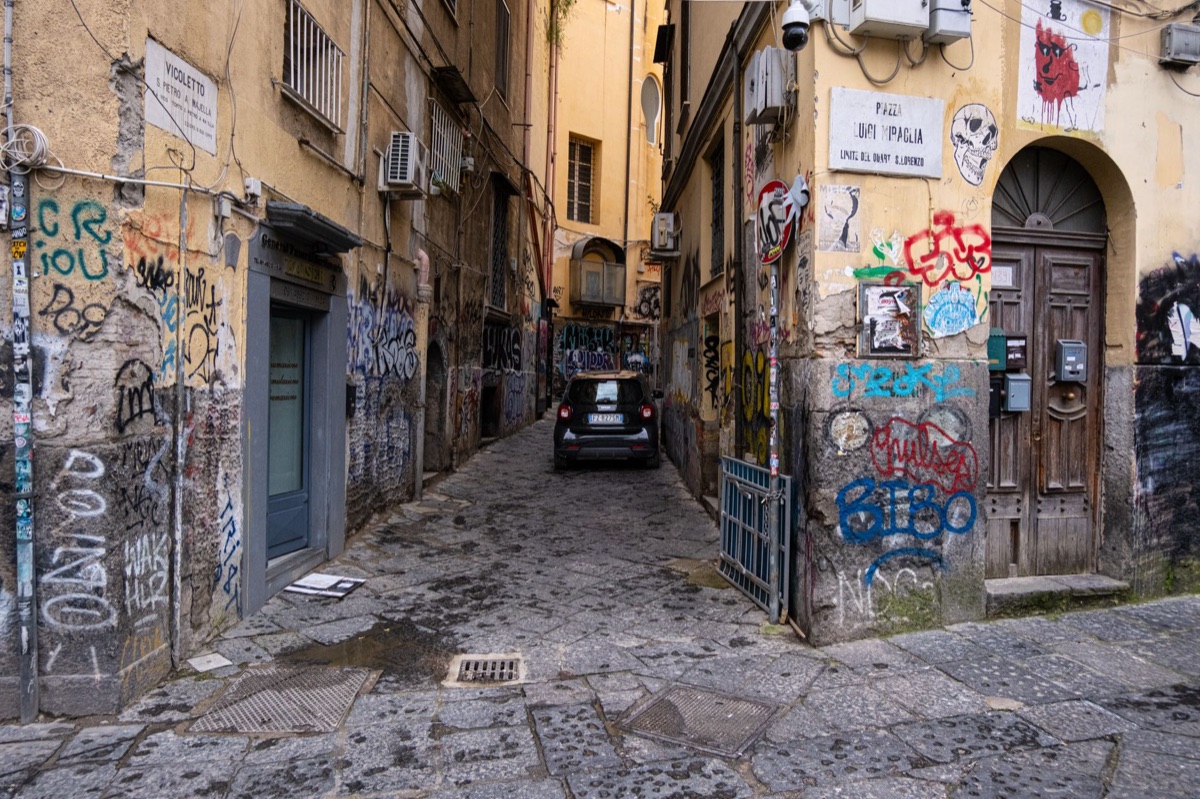
What does the restaurant reveal about modern Italy? The scent of garlic and spices wafts from a doorway, meeting the traditional aroma of espresso in a narrow alleyway where two worlds overlap. This intersection is not just a place to eat; it is a threshold where different ways of living meet.
In the 1880s, the Italian community in the Florida Department numbered 940, representing 4.5% of the department's population.
A restaurant is a "liminal space"—a place on the edge of transition. In the context of this controversy, the establishment is not just a place of commerce but a site where cultural authenticity is performed.
There is often an immense pressure on small, immigrant-owned businesses to balance "authentic" cultural representation with the commercial necessity of appealing to a local customer base.
The physical location also dictates the intensity of the reaction. In large, cosmopolitan cities, such controversies might be viewed as part of the urban fabric.
However, in smaller towns or suburbs, where the social structure is more tightly knit, a new establishment can be viewed as a disruption to the established social order.
The restaurant becomes a symbol of how much "change" a community is willing to host within its physical boundaries. To navigate these spaces, one might follow these steps:
- Identify the specific culinary tradition being contested.
- Evaluate the physical space to see if it adheres to traditional aesthetic standards.
- Observe how patrons interact with the menu to gauge cultural integration.
Understanding the physical space is only half the battle, though. The real storm often brews elsewhere.
Social Media as the Crucible: Amplification and Polarization
A thumb swipes upward on a glowing screen, moving past a flurry of angry emojis and heated political slogans. In the blink of an eye, a private moment is transformed into a public spectacle.
Digital platforms acted as the primary catalyst for this controversy. Social media has the unique ability to take a localized tension and amplify it until it reaches every corner of the country.
This amplification often strips away the nuance of the original event, replacing it with simplified narratives of "us versus them."
The commentary on these platforms typically falls into two camps: aggressive "pile-ons" and constructive (though rare) dialogue. The phenomenon of "cancel culture" has also played a role, where cultural offenses are met with digital boycotts.
This creates a polarized environment where the goal is often not to resolve the misunderstanding but to "win" the argument by delegitimizing the other side.
When I scrolled through the local hashtags, I was surprised by how quickly a single photo could spark a global debate. I noticed that comments often shifted from food critiques to intense political arguments within 2 to 3 minutes of a post going viral.
The digital footprint of such controversies can expand from a single city to millions of views in under 24 hours. This speed makes it difficult for anyone to catch up.
Navigating the Spectrum: Official vs. Grassroots Responses
The response to the controversy has followed two distinct paths. Official bodies—such as local authorities or industry associations—often attempt to focus on legalities, zoning, or standard business regulations to de-escalate the situation.
Their goal is usually to maintain order and adhere to the rule of law. In contrast, the grassroots response is much more emotional and unpredictable.
While some community groups might organize to support the business, others may use the controversy to push specific political agendas.
This creates a tension between the "official" reality (what the law says) and the "social" reality (how the public feels), often leaving the business owners caught in the middle of a storm they did not create.
| Feature | Localized Incident | National Controversy |
|---|---|---|
| Primary Driver | Specific operational dispute | Identity and cultural politics |
| Main Medium | Word of mouth / Local news | Social media / National press |
| Core Conflict | Business management | Integration vs. Tradition |
| Resolution Goal | Resolving the specific issue | Defining cultural boundaries |
As of 2025, local authorities are struggling to balance heritage preservation with modern business regulations. Community groups often organize protests that last 2 to 4 hours during peak weekend periods.
These grassroots movements can mobilize 50 to 100 participants in a single afternoon to voice dissent. But how do we move forward from this friction?
Summary of the Situation
The "Asian Restaurant Controversy" is not merely about food or business management; it is a symptom of a society navigating the complexities of the 21st century. It highlights how physical spaces serve as the front lines for cultural negotiations.
- Identify the Spark: Recognize that the initial event is often a catalyst for deeper, existing tensions.
- Analyze the Scale: Observe how digital tools turn local issues into national identity debates.
- Evaluate the Impact: Consider how these shifts affect the long-term social fabric of the community.






Comments 0